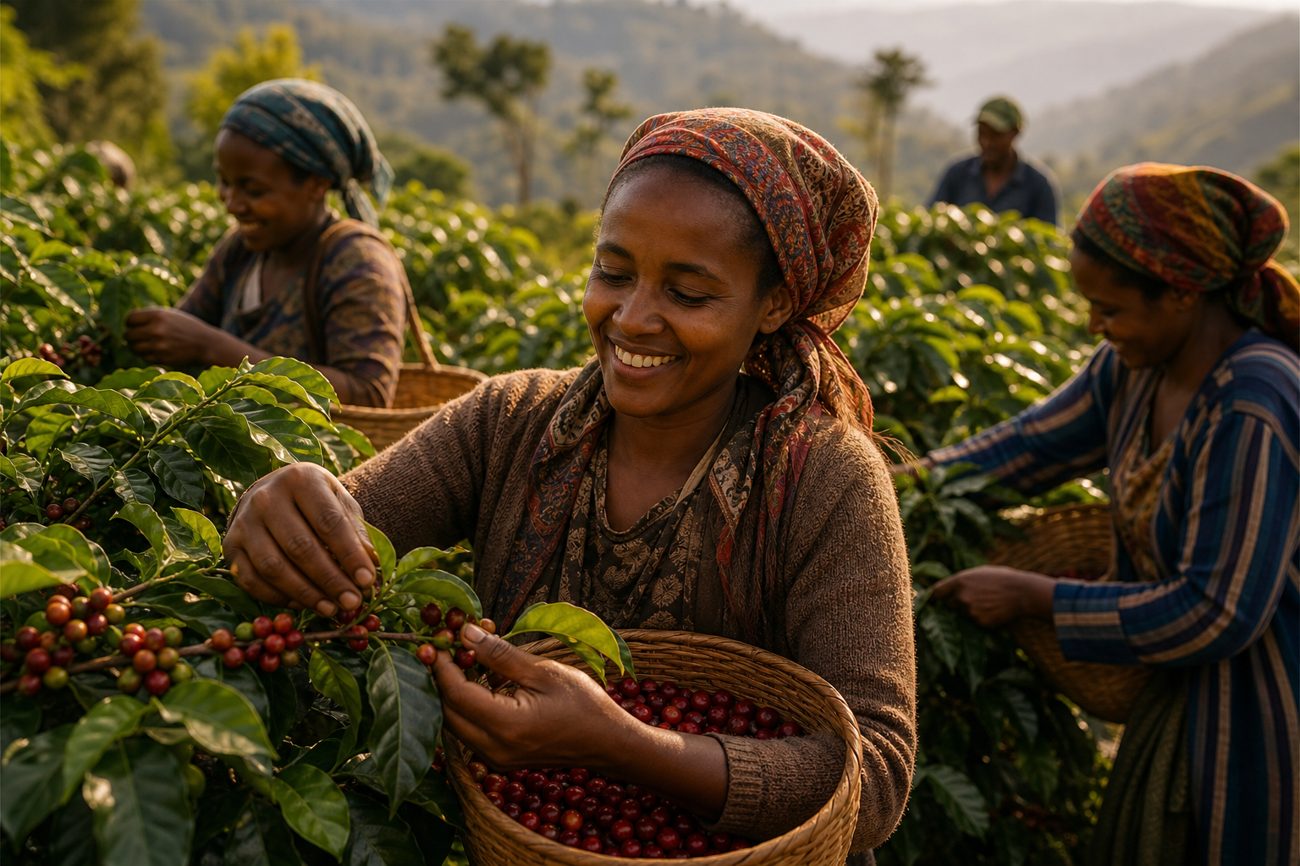
'Farmer-owned' appears on a lot of coffee bags. At OCFCU it isn't a slogan — it's the literal ownership structure, and it changes where the money from your coffee ends up.
The old way
For generations, most Ethiopian smallholders sold cherries to local traders, who sold to exporters, who sold to importers. Every link took a margin, and the farmer — who did the hardest, riskiest work — captured the smallest share. Prices were opaque and volatile.
The cooperative inversion
The cooperative model turns that pyramid upside down. Farmers join a local primary cooperative. Those cooperatives collectively own the union. The union grades, markets and exports the coffee directly — and because the farmers own the union, the profit flows back to them, not to a chain of intermediaries.
Where the premium goes
On top of a fairer base price, certifications like Fair Trade add a community premium. Cooperatives decide democratically how to spend it — and across OCFCU that has meant classrooms, clean-water points, clinics and roads in the villages that grow the coffee.
Why it matters to a buyer
When you buy farmer-owned coffee, more of what you pay reaches the people who grew it, and you get something increasingly rare: real traceability, back to a named cooperative and washing station. It's coffee you can stand behind — and it happens to taste extraordinary.